

Hauler & Hermann
Back to knowledge
Technical Insight

Electric Motor Rewinding: When It Pays Off and What Insulation It Needs

Yannick Wille

By Yannick Wille, Managing Director

October 15, 2026

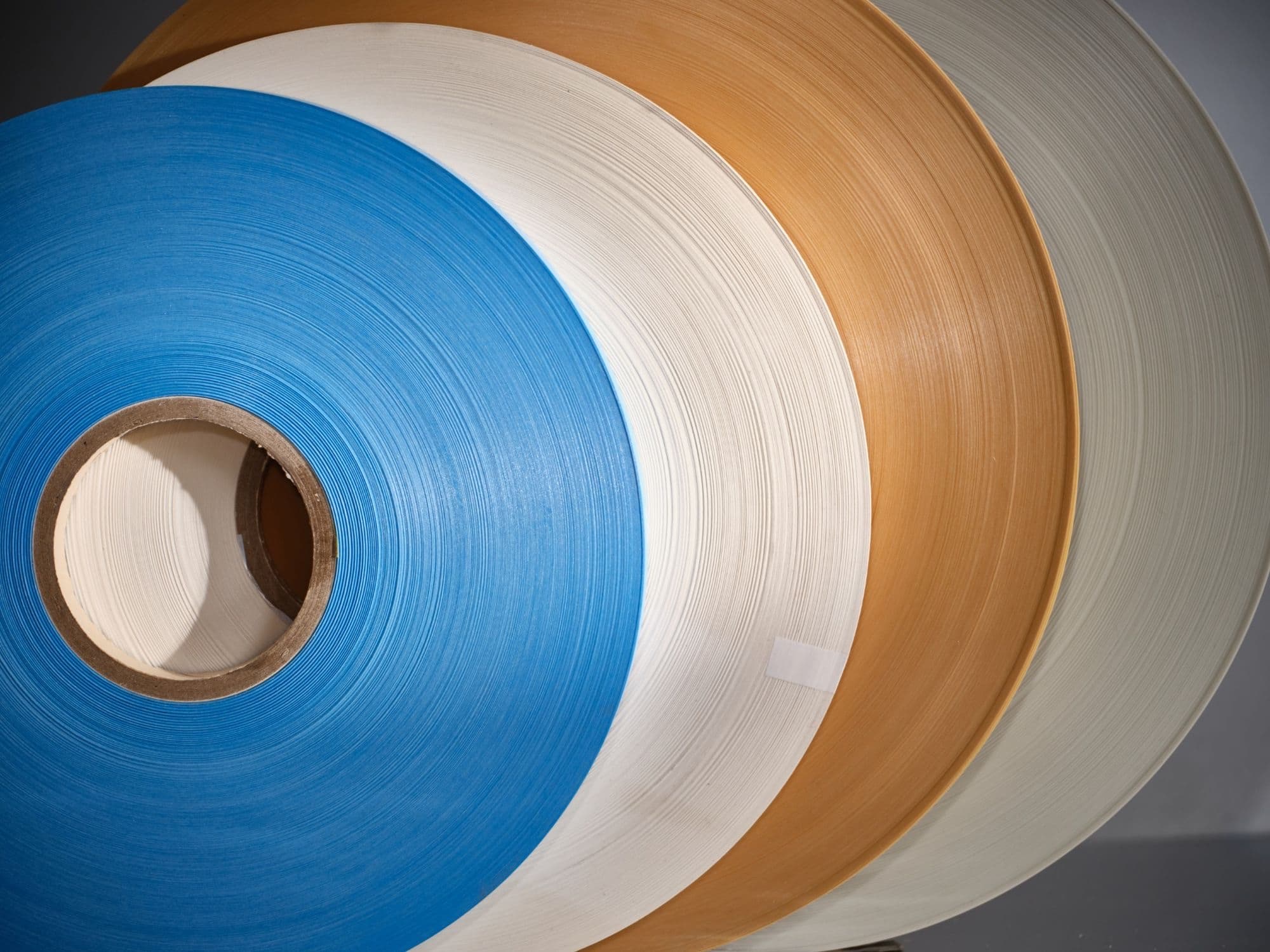
Several rolls of insulation material in blue, white and brown on cores, close-up

Electric motor rewinding means dismantling the motor, stripping the old winding from the stator, rebuilding the insulation in the slots and winding the stator with new copper wire. Whether it pays off is mostly an economic question. For small motors a replacement is often cheaper, while for large motors and generators rewinding is far more likely to be worth it because of the high machine value.

This article is for operators deciding whether to rewind or replace, and for rewind and repair shops. It shows what drives the cost, which criteria decide, how a rewind works and which rewinding insulation and supplies a rewind shop needs, in which supply form. We manufacture this insulation material for rewind shops and motor manufacturers.
Is motor rewinding worth it?

Whether rewinding an electric motor is worth it is usually decided by cost, not by engineering. A rewind is largely manual work, and that effort does not shrink in proportion with the motor.

For large motors and generators, a high machine value stands against the effort. That is why the repair business today rewinds or overhauls mainly larger motors and generators, and why specialised repair and rewind shops exist for exactly these machines.

“For small electric motors, dismantling, removing the old winding, rebuilding the insulation and rewinding are often so labour-intensive that replacing the complete motor is cheaper.”

Yannick Wille, Managing Director

How much does motor rewinding cost?

The cost of motor rewinding cannot be quoted as a flat figure, because it depends mainly on labour and copper, and both vary widely with the size and design of the motor. Only the rewind shop can give a reliable price after inspecting the motor.

The main cost drivers are, first, the labour for stripping, rewinding, impregnating and testing. Second, the amount of copper, since copper is a major cost factor. Third, the winding type: high-voltage machines with form-wound coils or Roebel bars need a far more elaborate insulation system than a round wire winding. Fourth, additional work on the core, bearings or shaft. Fifth, urgency, when a plant is at a standstill.

Compared with labour and copper, insulation material is usually a smaller item. Saving on the thermal class is therefore rarely worth it.

Rewind or replace: weighing cost, lead time and condition

There is no fixed power rating above which rewinding pays off. The decision lies with the machine operator, based on the rewind shop's quote and the condition of the machine. As a manufacturer of insulation parts, we do not assess this question.

Besides the price comparison, four points count. First, the lead time of a replacement, because every day of downtime adds to the bill. Second, the design: special motors and older machines often have no off-the-shelf replacement that fits without changes to the base, shaft or connections. Third, efficiency: with older motors it often favours replacement, because a new motor usually reaches a higher efficiency class. Fourth, the condition of the core, bearings and shaft, because a new winding will not save a damaged stator.

The larger and more specialised the machine, the more likely the numbers favour rewinding.

How does electric motor rewinding work?

Rewinding an electric motor with a round wire winding comes down to four steps: dismantling, stripping the old winding, rebuilding the insulation and winding the stator again. Before that, the rewind shop records the winding data of the old winding. If the old winding is burnt out, the core is usually tested afterwards, because burn-out can damage the interlaminar insulation. After winding, the stator is impregnated and electrically tested before the motor is reassembled.

For material requirements, rebuilding the insulation is the step that matters, because it is replaced completely. First the slot liner goes into the empty slot, then the wire is wound in. Depending on the winding design, a slot separator isolates two winding layers. After winding, a slot closure seals the slot, and in some designs a slot wedge adds a mechanical lock, see when a wedge has to back up the slot closure. Phase separators are placed between the coils of different phases in the end winding during coil insertion. Where each of these parts sits and where faults start is covered in the stator insulation parts in their fitting order.

Large generators and high-voltage machines with form-wound coils or Roebel bars are built differently. Their coils are insulated before insertion, and in repair work they are often taped by hand. More on this in how Roebel bars and form-wound coils are insulated.

Rewinding insulation for repair shops: lengths and rolls in standard widths

In the repair business almost every motor has different slot dimensions and stack lengths. What rewind shops need is insulation material they can bring to size themselves, rather than ordering parts to drawing for every job.

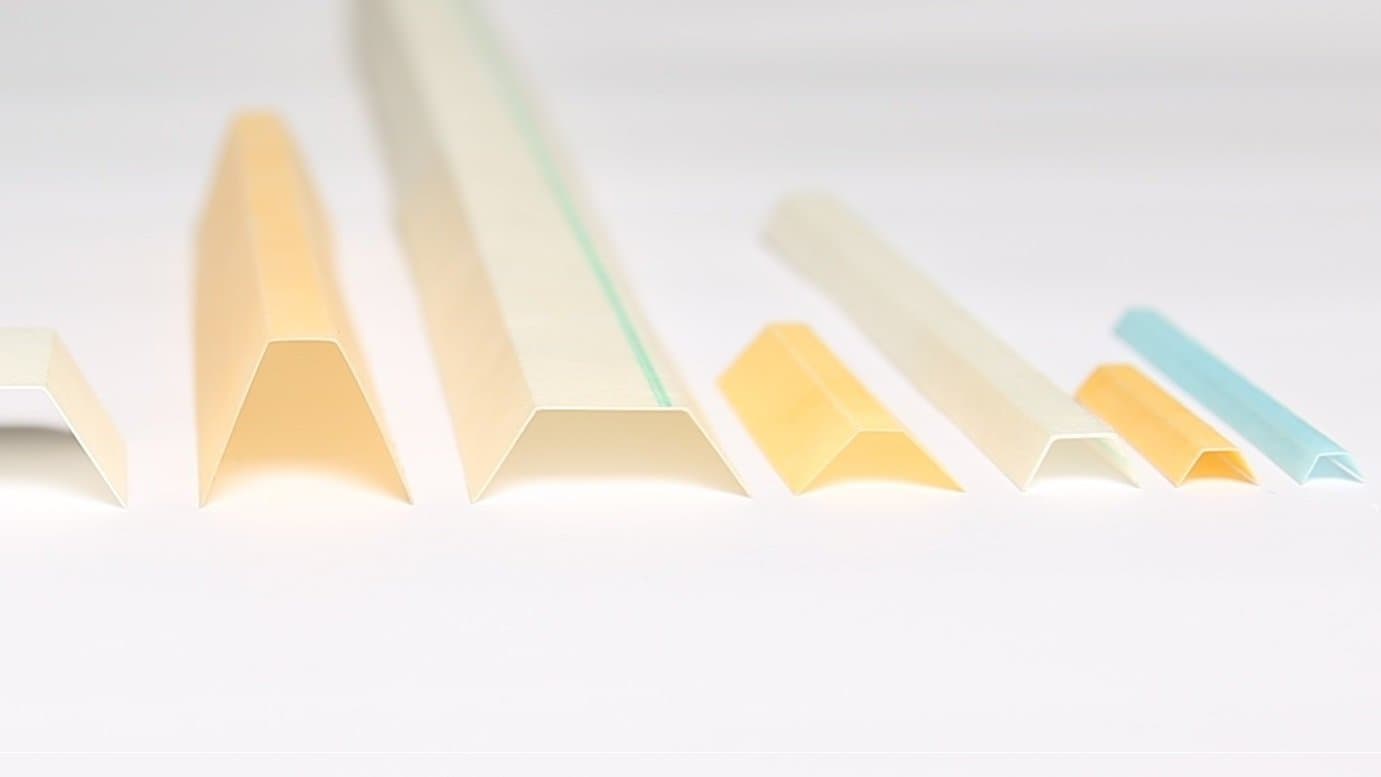
We supply slot closures by the metre in thermal classes B, F and H. Flexible insulation materials often go to rewind shops as rolls in standard widths and are cut to size on site with scissors or a guillotine shear.

The benchmark for material selection is the thermal class on the motor's rating plate: the new insulation should at least match it. Common choices are DMD laminate for classes B and F, NPN laminate for class F, and Nomex® 410 aramid paper or NKN laminate for class H.

“Repair shops above all need insulation materials they can use flexibly. Typical examples are slot closures by the metre, for instance in one-metre sections. The rewind shop cuts the lengths it needs from these itself.”

Yannick Wille, Managing Director
Folded slot closures in different sizes: supplied by the metre, the rewind shop cuts them to stack length itself

From repair to series production: which supply form fits

The right supply form depends on how often the same motor is wound and whether people or machines process the insulation. For one-off repairs, lengths and rolls in standard widths are the right choice, while in automated series production the material has to arrive in exactly the width the line expects.

In between are medium series. Here finished die-cut and formed parts that only need inserting are used: preformed slot liners, slot closures cut to length or die-cut phase separators. A rewind shop that regularly rewinds the same motor type can also move to this option. That is our core: we turn flat material into a shape by folding, forming and bending to customer drawing.

For a quotation we need thermal class, material and thickness, the supply form, the type of processing (manual or automated) and the quantity. For slot closures made to drawing, add back width, leg length, stack length and any chamfer you need.

“For manufacturers of new motors and larger series, things are different. Here we often supply roll material already slit to exactly the required width. This means the material can be processed directly on automated lines and, for example, inserted directly into the slot as slot insulation.”

Yannick Wille, Managing Director

Insulation material for your next rewind

If you rewind one motor type regularly, formed parts made to drawing save the cutting in the workshop. All insulation parts for stator and rotor are on the insulation parts for electric motor manufacturing page.

Do you have a specific requirement?

Talk to us. We will find the right insulation solution.

Frequently asked questions

Is it worth rewinding an electric motor?

For large motors and generators usually yes, because the high machine value justifies the labour. For small electric motors, replacement is often cheaper, because a rewind is largely manual work. The lead time of a replacement and the higher efficiency of new motors belong in the calculation too.

How much does it cost to rewind an electric motor?

Motor rewinding cost depends mainly on labour and the amount of copper, plus the winding type, any work on the core, bearings or shaft, and urgency. There is therefore no flat price, and the rewind shop gives a reliable quote after inspection.

What happens during motor rewinding?

The rewind shop records the winding data, dismantles the motor, strips the old winding and tests the core. It then rebuilds the insulation, rewinds the stator, and impregnates and tests the winding. The new insulation includes slot liners and slot closures and, depending on the design, slot separators, slot wedges and phase separators.

Which insulation material does a rewind shop need?

A rewind shop above all needs material it can use flexibly: slot closures by the metre, for example in one-metre sections, and rolls in standard widths that are cut on site with scissors or a guillotine shear. Material by the metre is available in thermal classes B, F and H, see slot closures.

Which thermal class does rewinding insulation need?

The new insulation should at least match the thermal class of the original, which is stated on the motor's rating plate. Common choices are DMD laminate for classes B and F, NPN laminate for class F, and Nomex® 410 aramid paper or NKN laminate for class H.